From data to discovery
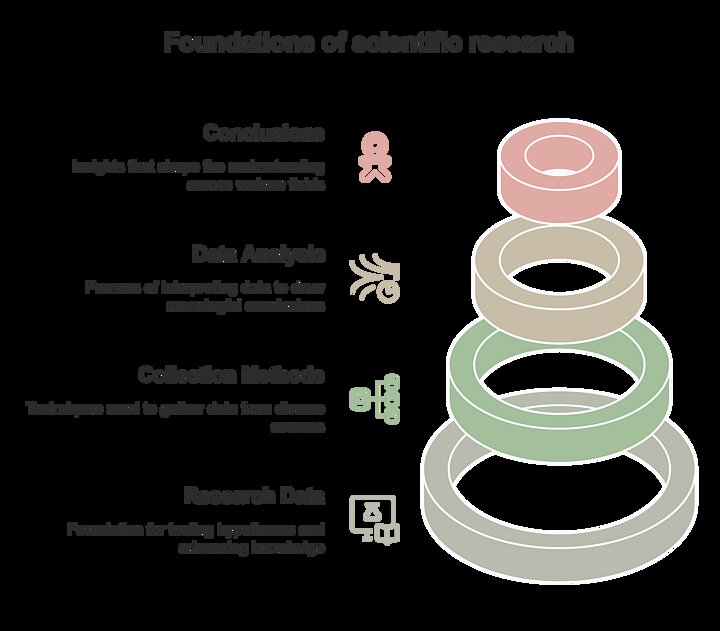
The research process is much like constructing a strong building – each layer is essential and supports the next. The infographic highlights four critical stages that form the foundation of credible, impactful scientific inquiry.
Research data
The foundation of all research. Data is the starting point of any scientific endeavor. It can take many forms – numerical measurements, interviews, observations, or documents. The quality, reliability, and relevance of data are vital, as they underpin the entire research process, enabling hypothesis testing and theory development.
Without credible data, credible results are impossible.
Methods of data collection
The bridge between reality and the researcher. This stage involves the systematic gathering of data using tools and techniques grounded in scientific methodology. Common methods include:
- questionnaires and surveys,
- questionnaires and surveys,
- field observations,
- document and database analysis.
Choosing the right method ensures the validity and reliability of the research findings.
Data analysis
Turning information into knowledge. Raw data gains meaning through analysis. This phase uncovers patterns, tests hypotheses, compares variables, and supports arguments. Depending on the nature of the data, researchers may use:
- statistical analysis for quantitative data,
- qualitative analysis for textual or observational data,
- mixed methods for a comprehensive approach.
This is where initial interpretations take shape, guiding the path toward conclusions.
Conclusions
The goal of scientific research. Conclusions distill the essence of the research findings. They confirm or challenge hypotheses, deepen understanding of the subject, and often inspire new questions. Conclusions also have real-world impact – shaping policy, solving problems, advancing technology, and enriching academic theory.
Summary
Each stage – from data collection to conclusions – forms an interconnected system. Skipping or weakening any element can compromise the integrity of the entire research effort. Mastering these foundations is essential for producing research that is not only valid and reliable, but also meaningful and transformative.